Installing a Board
Configure the rotary switch of the board address on EtherNet/IP board manufactured by Hilscher.
You can install one Fieldbus master board to the PC with Epson RC+ 8.0 installed. The slot number should be "Not in use (0)". Refer to the following table for configuration.Slot No. Rotary switch position Not in use 0 Slot No. 1 1 Slot No. 9 9 Install the EtherNet/IP board manufactured by Hilscher to the PCI bus or PCI Express bus of the PC with Epson RC+ 8.0 installed.
Installation methods of the EtherNet/IP board manufactured by Hilscher to the PCI bus/PCI Express bus and how to open the cover differ depending on the type of PC. Refer to the manuals of each PC for information on how to install the board to the PCI bus/PCI Express board.Connect EtherNet/IP board manufactured by Hilscher with the EtherNet/IP network.
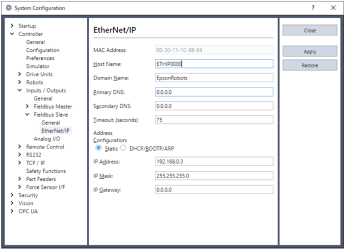
Describe an example to set the master and the slave as the setting below.
Setting item Value Address configuration Fixed address Master IP address 192.168.0.2 Slave IP address 192.168.0.3 Subnet mask 255.255.255.0 Input Bytes 32 Output Bytes 32 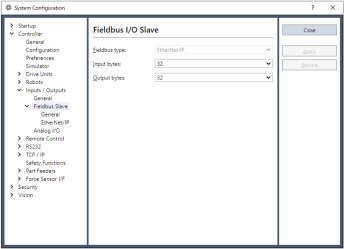
Start up the PC.
Select the Start menu - [SYCON .net] and execute it.

Set an Administrator password for SYCON .net.
Click [OK].
Be careful not to forget the Administrator password.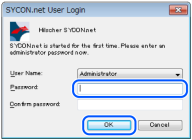
SYCON .net starts up.
Click [netDevice] - Device Catalog list on the right side - [CIFX RE/EIM].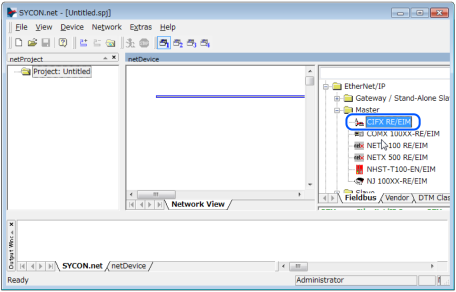
Importing slave EDS files
Click [Network] - [Import Device Descriptions…].
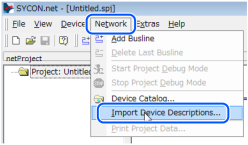
[Import Device Description] dialog box appears.
From [Files of type], select "DeviceNet EDS."
Select EDS files provided by each device manufacturer and click [Open].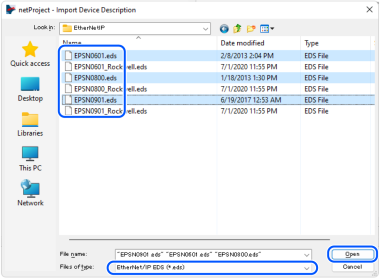
The following message appears.
Click [Yes]. EDS files are imported.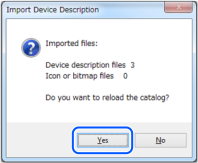
Adding a master icon
Click SYCON .net application software- [netDevice] -Device Catalog list on the right side- [EtherNet/IP] - [Master] - [CIFX RE/EIM].
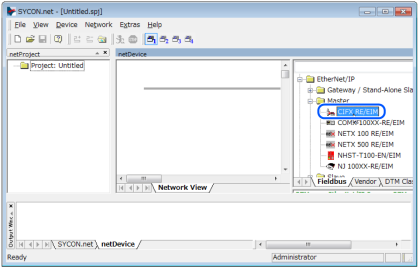
Drag & drop [CIFX RE/EIM] on the bold line on the left side of [netDevice].
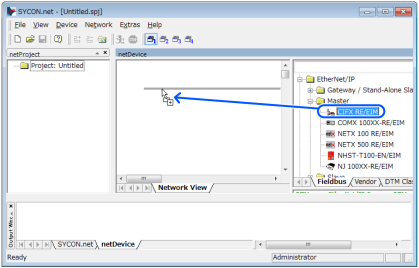
The "CIFX_RE_EIM" icon indicating EtherNet/IP board manufactured by Hilscher is connected.
Adding a slave icon
Click SYCON .net application software - [netDevice] - Device Catalog list on the right side - [EtherNet/IP] - [Slave] - Slave device.
In case of EtherNet/IP slave module:
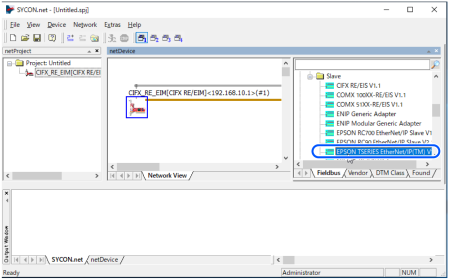
Drag & drop the selected slave device on the bold line on the left side of [netDevice].

EtherNet/IP Slave is connected and the icon appears.
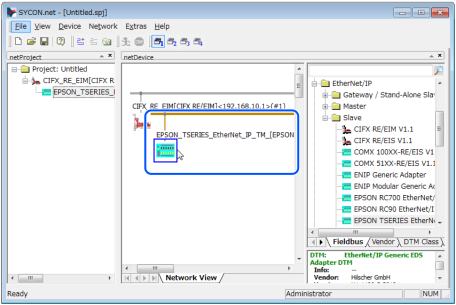
Settings on the master side
Right-click [netDevice] - [CIFX_RE_EIM] icon again, and click [Configuration…].
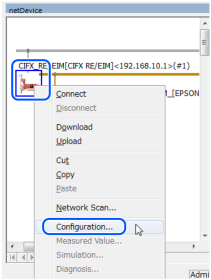
The [Configuration] dialog box appears.
Select [Settings] - [ Driver] tab.
Select the [CIFX Device Driver] checkbox and click [Apply].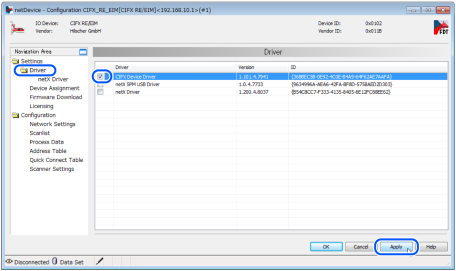
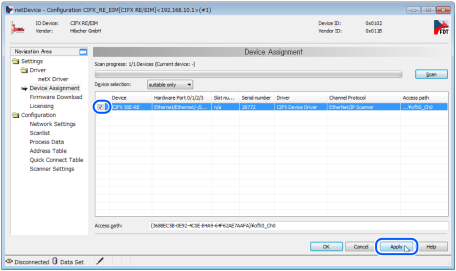
Select [Settings] - [Device Assignment] tab.
Select the [CIFX 50E-RE] checkbox.
Click [Apply].
Select [Settings] - [Driver] - [Firmware Download] tab.
Click [Browse…].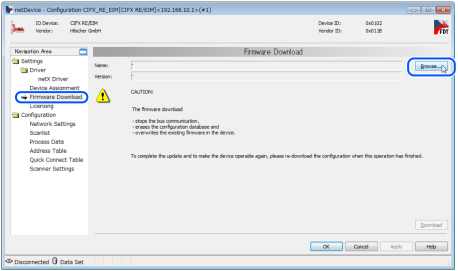
Display the [Firmware,_EDS,_Examples,Webpages\Firmware&_EDS\COMSOL-EIM V2.11.0.3\Firmware\cifX] folder of Communication-Solutions DVD.
Select [cifxeim.nxf].
Click [Open].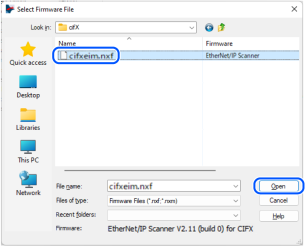
Confirm that [Name] is "EtherNet/IP Scanner for CIFX".
Click [Download].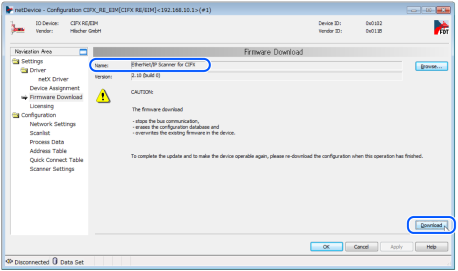
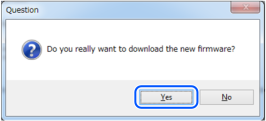
Click [Yes].
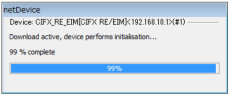
Start the installation of firmware.
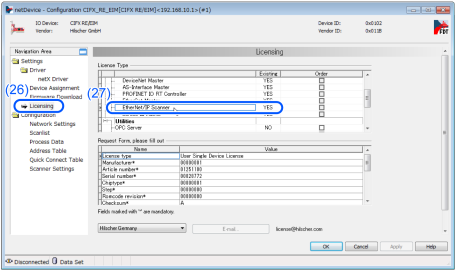
Select the [Settings] - [Licensing] tab.
Confirm that the license of [EtherNet/IP Scanner] is set to "Existing: YES".
Select [Configuration] - [Network Settings] tab.
Configure [IP Settings] and click [Apply].
e.g. IP Address: 192.168.0.2 (Fixed Addresses)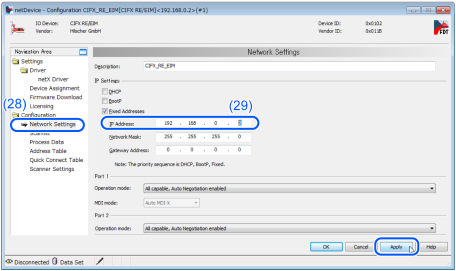
Select [Configuration] - [Scanlist].
Check the [Activate] checkbox for the slave device.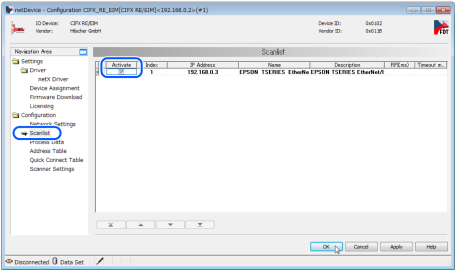
Configure [IP Settings] and click [OK].
e.g. IP Address: 192.168.0.2 (Fixed Addresses)Close [Configuration] dialog.
Configuring the slave side
Right-click [netDevice] - [EPSON_TSERIES_EtherNet_IP….] icon.
Select [Configuration…].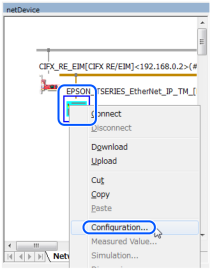
The [Configuration] dialog box appears.
Select [Configuration] - [Connection].
Select [Connection parameters] tab - [Connection1] - [O -> T] - [Size].
Enter "32" to [Parameter] and click [Apply].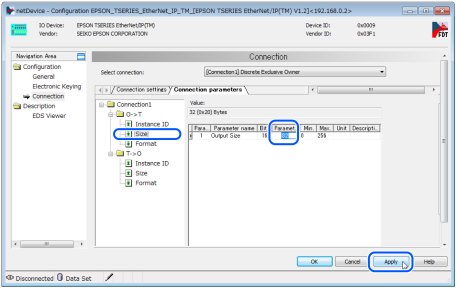
Select [Configuration] - [Connection].
Select [Connection parameters] tab - [T->O] - [Size].
Enter "32" to [Parameter] and click [OK].
Close [Configuration] dialog.
Downloading to the master board
Right-click [netDevice] - [CIFX_RE_EIM] icon again, and click [Configuration…].
The [Configuration] dialog box appears.Click [Configuration] - [Address Table].
Check the settings of [Address Table] and click [OK].
"Address Table"-Inputs - Length: 0x0020
"Address Table"-Outputs - Length: 0x0020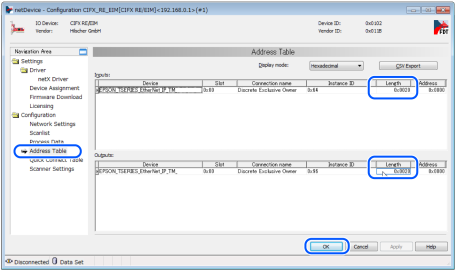
Close [Configuration] dialog.
Right-click [netDevice] - [CIFX_RE_EIM] icon and click [Download].
By the above step, "Setting on master side" and "Setting on slave side" are downloaded to the EtherNet/IP board.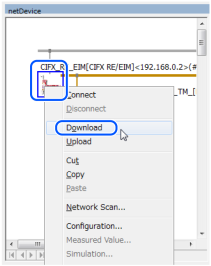
The settings are applied to EtherNet/IP board manufactured by Hilscher.
Connection Diagnosis
Right-click [netDevice] - [CIFX_RE_EIM] icon.
Select [Diagnosis…].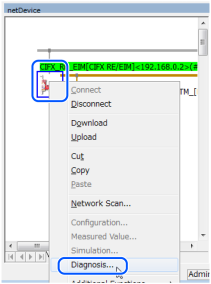
The [Diagnosis] dialog box appears.
Select [Diagnosis] - [Master Diagnosis].
Right after this, click [Diagnosis] - [General Diagnosis].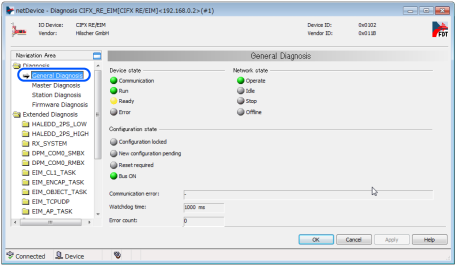
The state is normal when the Communication, Run, and Bus ON indicators are lit green and the Ready indicator is lit.
Select [Tools] - [IO Monitor] and perform the input/output test.
Click [OK].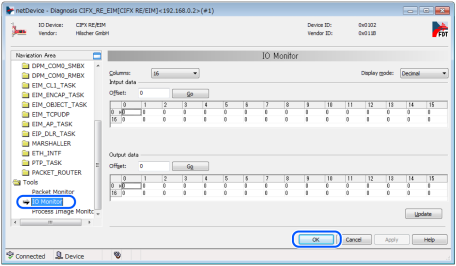
Close the [Diagnosis] dialog.
Click [File] - [Save] and save the settings changes to a file.


Exporting the configuration file (.csv) for RC+
Right-click [netDevice] - [CIFX_RE_EIM] icon.
Click [Additional Functions] - [Export] - [CSV…].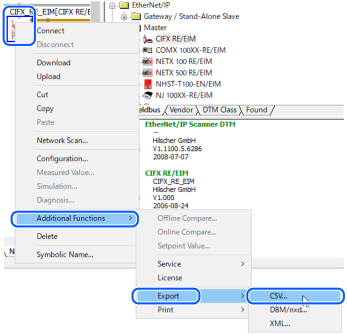
Save the CSV file to the file.
The exported CSV file will be used in the following section.
Epson RC+ 8.0 Configuration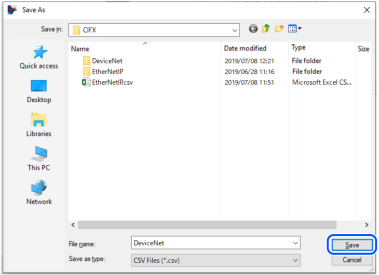
Now, the settings by SYCON .net are complete.
Close SYCON .net.
KEY POINTS
If there is a problem such as the fieldbus master board is not recognized by Windows, refer to the following section.